 EN
EN

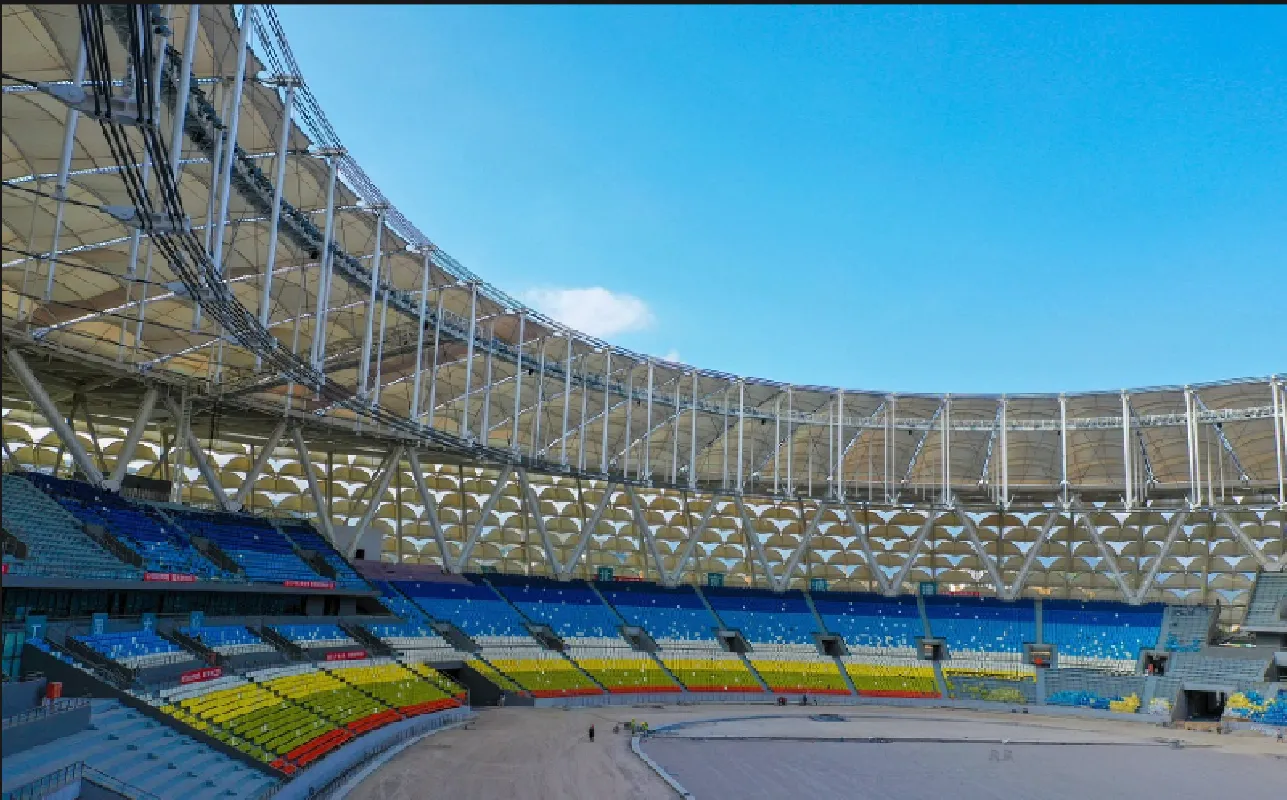
Digital Engineering: BIM, Digital Twins, and Simulation for Precision Stadium Steel Design
BIM-Driven Coordination for Complex Steel Node Fabrication
Building Information Modeling (BIM) enables precise coordination of complex steel nodes—where multiple beams, braces, and connections converge—in stadium construction. By integrating geometry, material properties, and spatial relationships into a shared 3D model, engineers visualize and validate every joint before fabrication begins. BIM clash detection identifies interferences early, reducing dimensional errors by up to 80% compared to traditional 2D workflows and cutting rework costs significantly. The model directly generates accurate shop drawings, streamlining the handoff from design to fabrication. Real-time collaboration across structural, architectural, and MEP teams ensures alignment across disciplines—accelerating on-site assembly and supporting the aggressive timelines typical of modern stadium projects.
Digital Twin Integration for Real-Time Structural Health Monitoring During Stadium Construction
A digital twin extends BIM by integrating live sensor data from the construction site—such as strain gauges, accelerometers, and temperature sensors mounted on critical steel members—into a dynamic, real-time virtual replica. During erection, this allows project teams to monitor actual structural behavior against predicted performance, detecting anomalies like unexpected deflection under temporary loads or thermal-induced stress. Alerts trigger immediate analysis, enabling rapid, evidence-based decisions. The twin also simulates sequential lifting and bracing sequences to optimize erection logistics and minimize risk. By continuously validating design assumptions against field conditions, digital twins ensure the steel structure remains within safety, serviceability, and performance thresholds throughout construction—without compromising schedule integrity.
Computational Simulation of Dynamic Loads on Stadium Steel Structures (Crowd, Wind, Seismic)
Advanced finite element analysis (FEA) and computational fluid dynamics (CFD) simulate how stadium steel frames respond to dynamic forces—including crowd-induced vibrations, wind pressures on long-span roofs, and seismic shaking. Crowd simulations replicate rhythmic loading from standing spectators to verify compliance with human vibration comfort limits. CFD models validate and refine wind tunnel test results, predicting peak suction and pressure zones on cantilevered roofs and open concourses. In seismically active regions, nonlinear time-history analyses assess ductility, connection performance, and energy dissipation under design-level earthquakes. These simulations directly inform member sizing, connection detailing, and damping strategies—ensuring structural safety, occupant comfort, and material efficiency before fabrication begins.
Prefabrication and DFMA: Accelerating Stadium Steel Delivery with Modular Precision
Modular Prefabricated Steel Trusses in Major Stadium Projects: 37% On-Site Labor Reduction (FIFA World Cup 2023)
Modular prefabrication transforms stadium steel delivery by shifting high-precision work from congested, weather-dependent sites to controlled factory environments. While foundations and substructures are built on-site, steel trusses, roof segments, and seating modules are fabricated off-site—pre-drilled, pre-welded, and ready for bolted assembly. This parallel workflow cuts overall construction time by up to 50% and reduces on-site labor by 37%, as demonstrated in FIFA World Cup 2023 venues. Factory-controlled quality eliminates weather delays, minimizes rework, and ensures dimensional consistency. The result is faster, safer, and more predictable delivery—without trade-offs in structural performance or design ambition.
Design for Manufacture and Assembly in Stadium Tiered Seating and Cantilever Framing
Design for Manufacture and Assembly (DFMA) embeds constructability into the earliest design stages—optimizing each steel component for efficient fabrication, transport, and rapid, error-resistant assembly. In tiered seating, pre-fabricated grandstand modules feature precision-machined interfaces that interlock without field welding or adjustment. Cantilever framing benefits from standardized connection details, simplified member profiles, and consistent bolt patterns—all coordinated in BIM to resolve clashes before manufacturing. DFMA reduces working-at-height exposure, improves worker safety, and enhances scheduling reliability. It makes complex geometries—like sweeping upper decks and dramatic roof overhangs—not just feasible, but deliverable on time and within budget.
Advanced Materials: High-Performance Alloys and Weathering Steel for Durable Stadium Structures
Corrosion-Resistant Weathering Steel in Coastal Stadiums: 22-Year Lifecycle Performance (Singapore National Stadium)
Weathering steel delivers exceptional durability in aggressive coastal environments, forming a tightly adhered, self-protecting patina that halts further corrosion. Its proven 22-year lifecycle performance at Singapore National Stadium—exposed to tropical humidity, salt-laden air, monsoonal rains, and intense UV radiation—confirms its resilience without protective coatings or routine maintenance. Used extensively in exposed roof trusses, façade elements, and structural framing, it maintains load-bearing integrity while reducing long-term operational costs. Specifying weathering steel aligns with sustainable design goals: fewer interventions mean lower embodied carbon over time and enhanced safety for large, dense crowds in high-risk climate zones.
Long-Span Roof Innovation: Hydraulic Lifting and Tensile-Steel Hybrid Systems for Iconic Stadium Roofs
Hydraulic Synchronous Sliding of 3,200-Ton Roof Segments in Legacy Stadium Upgrades
Hydraulic synchronous sliding enables millimeter-accurate movement of massive roof structures during stadium retrofits—preserving historic fabric while upgrading capacity and performance. In the Beijing National Stadium upgrade, a 3,200-ton roof segment was slid into position using computer-synchronized hydraulic jacks, maintaining full operational continuity below. Real-time load monitoring and positional feedback ensured stability and control throughout the multi-day operation. This technique extends the functional life of iconic venues, avoids demolition waste, and meets modern structural, acoustic, and accessibility standards—proving that legacy infrastructure can be transformed, not replaced.
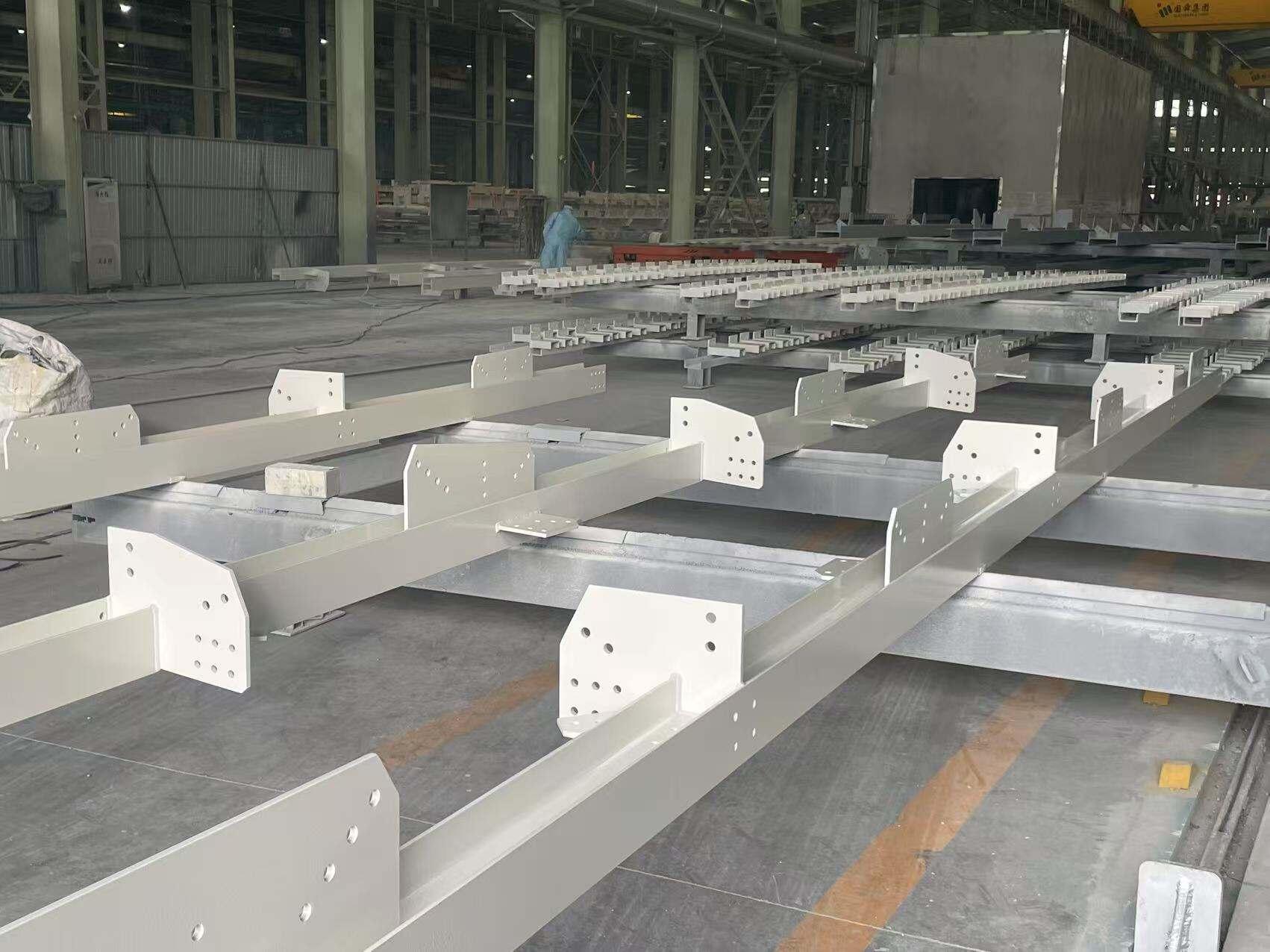
Tensile-Steel Hybrid Roofs Enabling 180m Cantilevers Without Intermediate Supports
Tensile-steel hybrid roofs merge high-strength steel cables with rigid primary frames to create ultra-long, column-free spans—now exceeding 180 meters in leading stadiums. By balancing tensile and compressive forces across the entire system, these roofs achieve unprecedented openness and visual lightness while maintaining stiffness under dynamic loads. The hybrid approach eliminates obstructive interior supports, delivering unobstructed sightlines and flexible event configurations. Rigorous FEA and full-scale testing confirm performance under wind uplift, crowd-induced resonance, and thermal cycling—making these systems both architecturally expressive and structurally robust.
Table of Contents
- Digital Engineering: BIM, Digital Twins, and Simulation for Precision Stadium Steel Design
- Prefabrication and DFMA: Accelerating Stadium Steel Delivery with Modular Precision
- Advanced Materials: High-Performance Alloys and Weathering Steel for Durable Stadium Structures
- Long-Span Roof Innovation: Hydraulic Lifting and Tensile-Steel Hybrid Systems for Iconic Stadium Roofs