 EN
EN

The Foundational Mechanics of Metallurgical Integration
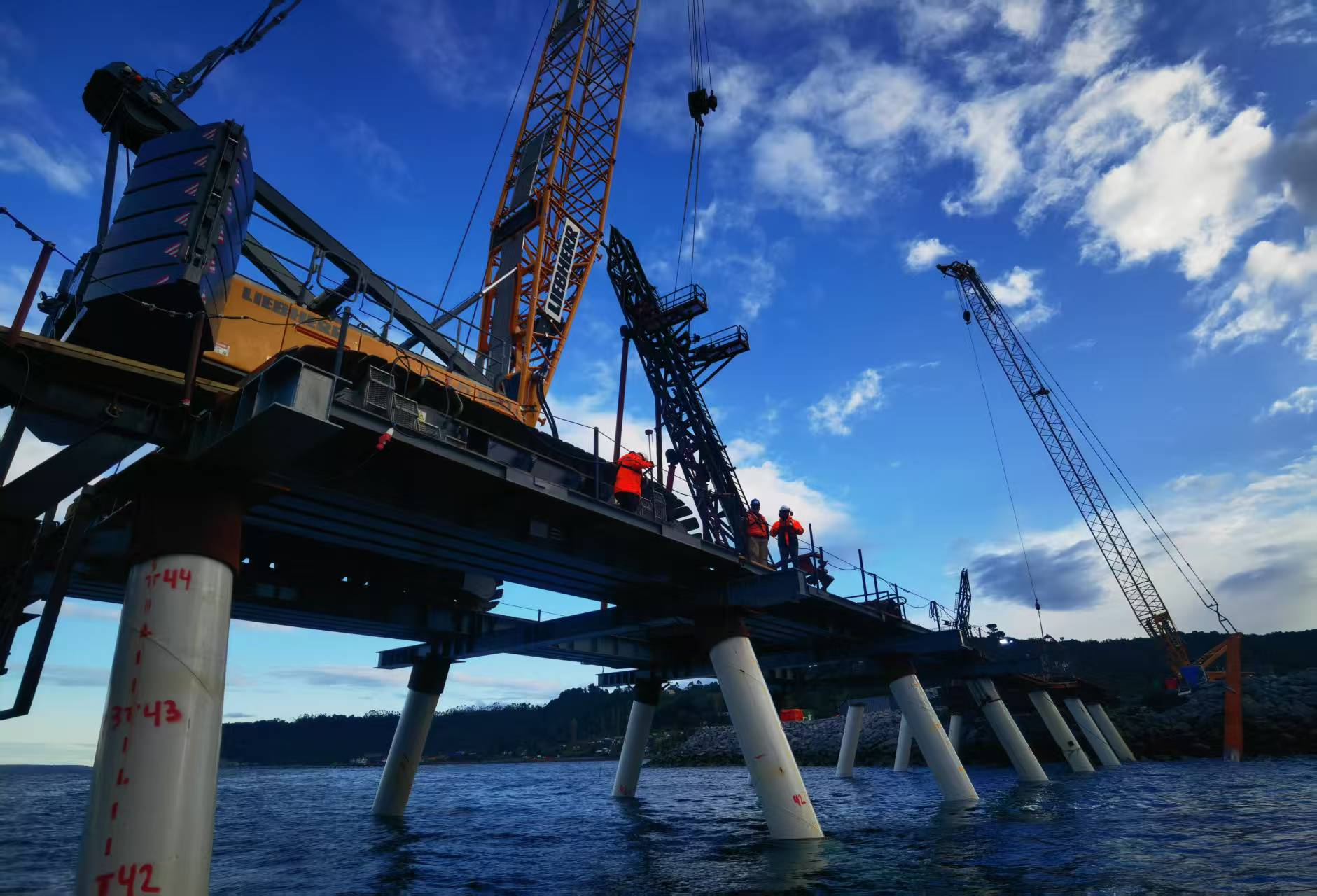
Heavy commercial and industrial construction projects depend entirely on how structural steel components are united into a cohesive, load-bearing skeletal framework. While various mechanical joining techniques have historically offered quick assembly on busy jobsites, structural engineers increasingly prioritize continuous thermal fusion for demanding multi-story facilities and expansive industrial installations. Selecting the correct joining strategy dictates how effectively dynamic loads, environmental stress, and multi-axial forces transfer across columns, beams, and trusses throughout the operating lifespan of a facility. Field observations from structural inspection specialists and civil engineering case studies consistently demonstrate that understanding the distinct mechanical behaviors of fusion-joined assemblies is vital for optimizing safety, minimizing structural fatigue, and ensuring absolute architectural stability under severe operational demands. When base metals and compatible filler materials melt together during the fusion process, the resulting atomic bond establishes an uninterrupted continuum that handles physical stress with exceptional metallurgical predictability.
Elimination of Mechanical Vulnerabilities and Micro-Slip
The primary mechanical advantage of a fusion-joined framework lies in its ability to eliminate the inherent weak points found in mechanical fastener networks. Bolted connections rely heavily on localized friction, bearing pressure, and tight fastener shanks, which remain susceptible to micro-movement, bolt relaxation, and progressive wear under continuous vibration and cyclic loading. Over extended operational periods, these tiny shifts accumulate into measurable joint slippage and localized stress concentrations that compromise the rigidity of the entire framework. In contrast, thermal fusion melts the base metals and compatible filler materials together, creating a unified, homogenous connection that cannot loosen, shift, or experience differential movement regardless of how heavy or continuous the applied loads become. Engineering audits of heavy manufacturing plants consistently reveal that welded joints maintain their original clamping geometry and structural stiffness over decades of heavy service without requiring routine bolt-retightening maintenance interventions.
Uniform Load Distribution Under Extreme Dynamic Forces
Structural resilience during unexpected environmental events or heavy industrial operations depends heavily on how a building framework handles internal stress transfer. When severe lateral pressures from storm winds or seismic ground motion impact a structure, the force must be dissipated smoothly across the entire skeletal matrix without encountering abrupt geometric bottlenecks. Finite element analysis and structural stress modeling confirm that continuous welded connections distribute internal forces uniformly across the full cross-sectional area of the joined members. This seamless continuity prevents stress spikes from accumulating at connection junctures, protecting the structural integrity of the facility and ensuring exceptional load-bearing resilience under extreme operational conditions. Rather than forcing stress to travel through localized bolt holes and gusset edges, welded joints allow energy to flow naturally along the primary axes of the structural steel profiles.
Advanced Corrosion Resistance Through Sealed Joint Geometries
Environmental exposure poses a persistent threat to commercial building longevity, particularly in industrial zones subject to high humidity, chemical fumes, and airborne pollutants. Mechanical fastener configurations inherently introduce microscopic gaps, overlapping plates, and crevice zones where moisture, salt, and corrosive agents can accumulate, accelerating localized oxidation and rust propagation over time. Conversely, a properly executed continuous fusion seal creates an impenetrable barrier against atmospheric ingress. Metallurgical examinations verify that uninterrupted welded seams eliminate vulnerable interfacial spaces, protecting the internal joint matrix from moisture penetration and drastically reducing long-term maintenance interventions across harsh operational environments. This sealed geometry prevents hidden corrosion pockets from forming deep within structural connections, ensuring that the hidden structural members retain their full design strength throughout the entire lifecycle of the building.
Delivering Absolute Dependability Through Global Manufacturing Capabilities
Adopting advanced, high-integrity joining methodologies directly influences the structural integrity, safety standards, and financial viability of modern construction projects. By eliminating joint slippage, optimizing mass distribution, and securing environmental resistance, structural engineers construct robust facilities capable of enduring decades of heavy industrial use. Superior structural fabrication transforms complex engineering blueprints into safe, dependable building realities. Guoshun applies extensive manufacturing expertise, advanced automated welding technologies, and stringent quality control protocols to produce exceptional structural steel components designed for demanding structural applications. Operating through a robust, globally integrated supply network, Guoshun delivers continuous access to precision-fabricated steel profiles and comprehensive supply chain coordination for major construction enterprises worldwide. Dedicated industrial innovation transforms raw structural materials into an enduring foundation, empowering developers to execute ambitious architectural projects with absolute confidence.
Table of Contents
- The Foundational Mechanics of Metallurgical Integration
- Elimination of Mechanical Vulnerabilities and Micro-Slip
- Uniform Load Distribution Under Extreme Dynamic Forces
- Advanced Corrosion Resistance Through Sealed Joint Geometries
- Delivering Absolute Dependability Through Global Manufacturing Capabilities