 EN
EN

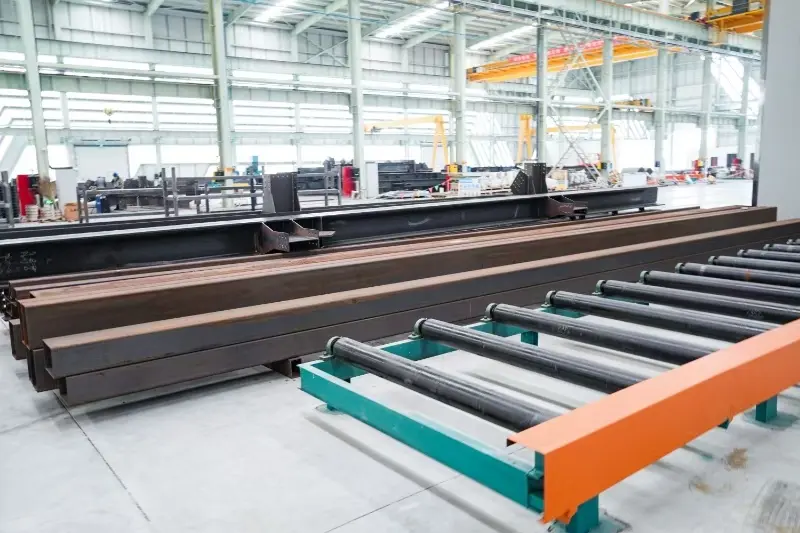
How Prefabricated Steel Shifts Labor from Site to Factory
Off-site fabrication centralizes skilled labor in controlled environments
Prefabricated steel construction reallocates the most labor-intensive tasks—welding, cutting, and fitting—from chaotic job sites to specialized fabrication facilities. In a factory setting, skilled trades work year-round under consistent temperature, lighting, and safety conditions. This controlled environment eliminates weather delays, material spoilage, and productivity losses caused by on-site congestion. As a result, contractors deploy smaller field crews focused exclusively on assembly—not full-scale fabrication. Factory jigs and automated equipment ensure precise tolerances across every component, reducing rework that would otherwise consume additional labor on site. Industry data indicates prefabrication can lower total labor demand by as much as 30%, helping firms stretch their workforce further amid a persistent shortage of experienced welders and fitters.
Quantified impact: 40–60% reduction in on-site man-hours versus conventional steel erection
Compared with traditional stick-built steel erection—where every beam is cut, drilled, and welded in place—prefabricated systems routinely cut on-site man-hours by 40 to 60 percent. This magnitude of reduction is possible because factory-fabricated columns, rafters, and bracing arrive pre-drilled, numbered, and ready to bolt together. On-site crews require only alignment tools and torque wrenches, eliminating the need for heavy burning equipment, fitters, and multiple inspection passes. The resulting schedule compression means fewer workers on site for fewer days—directly lowering payroll, lodging, and equipment rental costs. For example, a typical 50,000‑square‑foot warehouse requiring 1,200 man‑hours using conventional methods can be erected in roughly 500 to 700 man‑hours with prefabricated steel, freeing up skilled labor for other projects while accelerating the client’s time to occupancy.
Standardized Prefabricated Components Accelerate Assembly and Cut Crew Duration
Bolt-together design eliminates time-intensive field processes (welding, cutting, fitting)
Prefabricated steel structures rely on bolted connections that install 70% faster than traditional field-welded joints. Factory automation—including CNC cutting and robotic welding—eliminates the need for on-site torch cutting, grinding, and fit-up. Components arrive precisely sized and pre-drilled, minimizing rework caused by field errors. Skilled ironworkers are replaced by small crews operating cranes and impact wrenches, slashing on-site man-hours by up to 52%. Labor costs drop by an average of $18 per square foot—a figure validated by the National Institute of Building Sciences’ analysis of modular and prefabricated construction economics.
Schedule compression reduces on-site labor exposure—fewer workers, fewer days
Prefabricated systems compress the construction timeline from 28–40 weeks down to 14–20 weeks—a 30–50% reduction. With most fabrication completed off-site, on-site labor hours fall 40–60% compared to conventional steel erection. A typical 10,000 sq ft prefabricated building requires only 3–5 days of assembly after foundation curing, versus months for traditional methods. Fewer days on site mean lower exposure to weather delays, less need for temporary facilities, and a smaller, more focused crew. The entire project faces reduced risk from labor shortages or scheduling conflicts.
Strategic Labor Reallocation: Why Prefabricated Steel Optimizes Total Labor Cost
Traditional construction often sequences design, fabrication, and erection in a linear chain, causing idle time and labor inefficiency. Prefabricated steel changes this dynamic.
Decoupling design, fabrication, and erection enables parallel workflows and productivity gains
By separating these phases, project teams run design refinement while factory fabrication is already underway. This parallel operation slashes project duration and maximizes labor productivity. Engineers finalize connections as the steel mill produces beams. Erectors mobilize only when components arrive, avoiding costly standby hours. Total on-site man-hours drop by 40–60% compared to conventional methods—lowering labor costs because fewer skilled workers are needed. This decoupling also reduces change-order delays through clearly defined handoffs. Prefabricated steel transforms construction into an optimized assembly line rather than a reactive process.
Addressing the Skilled Labor Shortage with Prefabricated Metal Building Systems
Case study: PEMB warehouse project achieves 52% on-site labor reduction amid regional shortage
A regional construction project for a pre-engineered metal building (PEMB) warehouse faced a severe shortage of ironworkers and welders. By selecting a prefabricated system, the team cut on-site labor by 52% compared with a similar conventional steel building. Factory-assembled columns, rafters, and roof panels arrived ready for bolt-up erection. The reduced crew size also shortened the schedule by six weeks, mitigating risk from ongoing labor scarcity. This case illustrates how prefabricated metal building systems enable projects to proceed even when skilled workers are unavailable locally—addressing the construction industry’s workforce challenge without sacrificing quality, safety, or timeline.
FAQ
What are the main benefits of prefabricated steel systems?
Prefabricated steel systems reduce on-site labor by up to 60%, enable faster assembly with pre-drilled and pre-numbered components, and lower costs by minimizing rework and streamlining processes.
How does prefabricated steel address the skilled labor shortage?
By shifting the most labor-intensive tasks to factories, prefabricated steel allows smaller, less specialized on-site crews to complete assembly efficiently, reducing reliance on specialized trades like welders and fitters.
What is the average time savings with prefabricated steel construction?
Prefabricated systems can compress construction timelines by 30–50%, reducing a traditional 28–40 week schedule down to 14–20 weeks for many projects.
How does prefabricated steel affect project costs?
It lowers costs by reducing on-site labor hours by up to 60%, cutting temporary facility needs, minimizing weather-induced delays, and requiring fewer specialized tools and equipment on site.
Can prefabricated steel systems maintain quality and safety standards?
Yes, components are fabricated in controlled environments with high precision, ensuring quality and reducing on-site safety risks.
Table of Contents
- How Prefabricated Steel Shifts Labor from Site to Factory
- Standardized Prefabricated Components Accelerate Assembly and Cut Crew Duration
- Strategic Labor Reallocation: Why Prefabricated Steel Optimizes Total Labor Cost
- Addressing the Skilled Labor Shortage with Prefabricated Metal Building Systems
-
FAQ
- What are the main benefits of prefabricated steel systems?
- How does prefabricated steel address the skilled labor shortage?
- What is the average time savings with prefabricated steel construction?
- How does prefabricated steel affect project costs?
- Can prefabricated steel systems maintain quality and safety standards?