 EN
EN

Parallel Workflows: How Prefabricated Steel Enables Concurrent Project Phases
Simultaneous Engineering, Procurement, and Off-Site Fabrication Compress the Critical Path
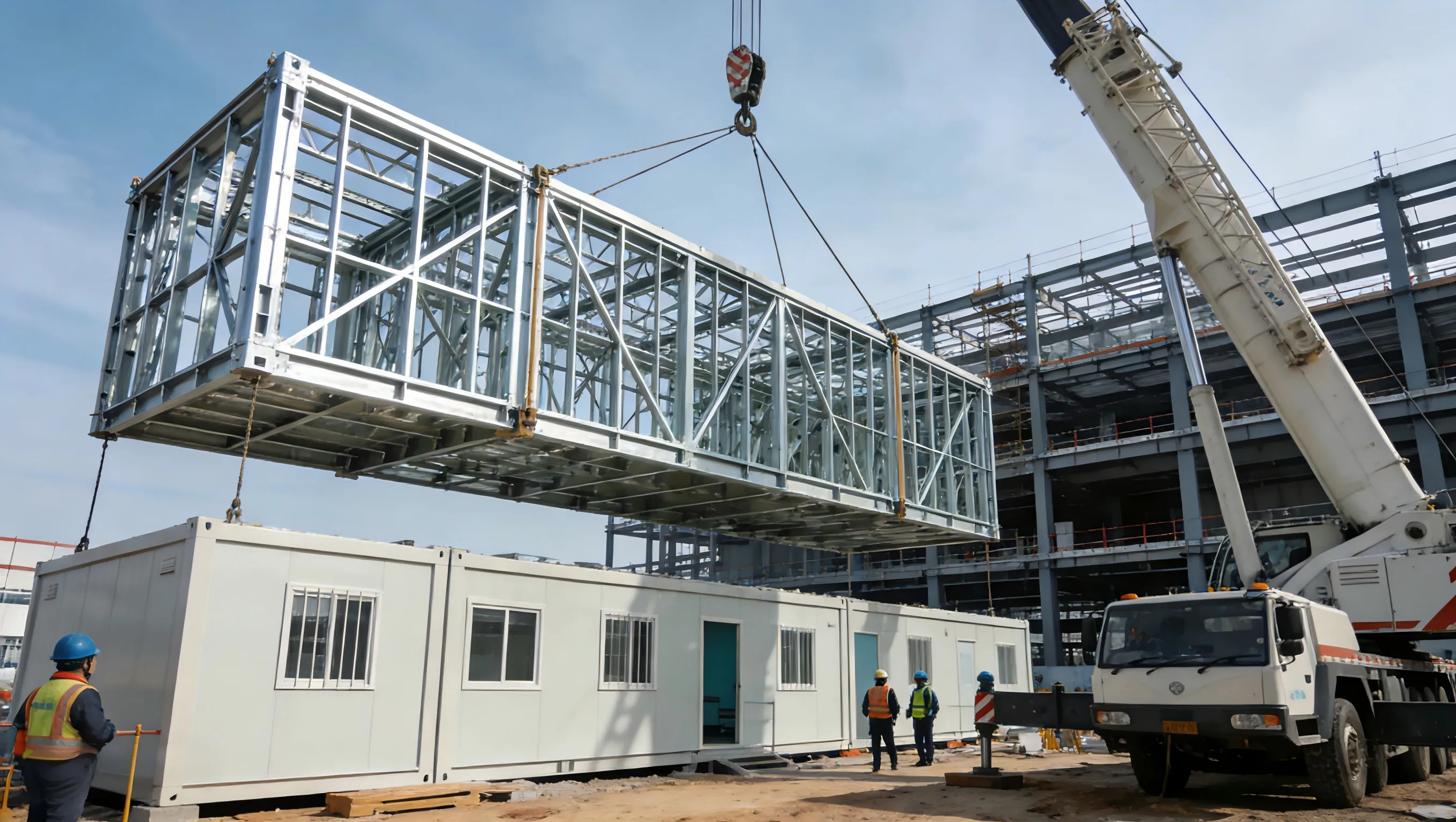
Traditional construction follows a rigid linear sequence—design, then procurement, then on-site erection—each phase stalling until the previous one finishes. Prefabricated steel dismantles this bottleneck by shifting structural fabrication to controlled factory floors while site preparation and foundation work advance in parallel. This concurrent workflow compresses the critical path, eliminating idle time between stages. As soon as foundations are poured, pre-cut steel components are already being welded, coated, and bundled off-site—with MEP supports often pre-installed. Design-to-fabrication coordination is streamlined through BIM (Building Information Modeling), enabling engineering teams to finalize structural details simultaneously with procurement and fabrication—all before a single shovel hits the ground. Industry analyses show this overlap cuts overall project timelines by 30–50%, while factory-controlled production achieves 98% schedule adherence—compared to just 63% for traditional sites exposed to weather delays. The result is a seamless handoff from ground-breaking to structural completion, enabling developers to bring facilities online weeks earlier and accelerate time-to-revenue.
Data-Driven Validation: 35–40% Faster Delivery vs. Conventional Steel Erection
Quantitative benchmarking consistently demonstrates that prefabricated steel structures achieve erection cycles 35–40% shorter than conventional stick-built steel frames. A 2023 analysis of 50 industrial projects captured the following typical timelines for a 50,000 sq ft facility:
| Phase | Conventional Steel Erection | Prefabricated Steel Erection | Time Savings |
|---|---|---|---|
| On-site assembly & lifting | 12–15 weeks | 7–8 weeks | 40–47% |
| Total project (foundation to shell) | 26–30 weeks | 16–20 weeks | 35–38% |
These gains stem from precision-engineered connections, off-site pre-assembly, and dramatically reduced on-site labor hours—industry reports indicate 40–60% fewer labor hours per project. A 2023 survey revealed that 78% of developers now select prefabricated steel for time-sensitive builds, citing 4–8 weeks earlier occupancy. For a $5M project, finishing 10 weeks early saves approximately $77,000 in interest alone. Consistent results across warehousing, manufacturing, and commercial projects confirm that this 35–40% delivery acceleration is not an outlier but a repeatable, data-backed advantage.
Off-Site Fabrication: Eliminating On-Site Delays and Uncertainty
Weather Independence, Labor Efficiency, and Predictable Lead Times for Prefabricated Components
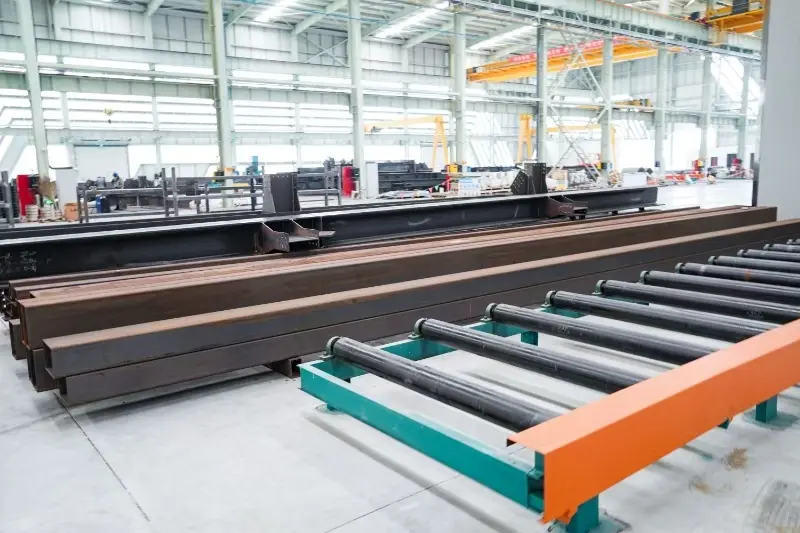
Off-site fabrication shifts critical structural work into a controlled factory setting—neutralizing weather-related disruptions that routinely delay conventional construction. Rain, extreme temperatures, and wind no longer halt progress, because steel components are cut, welded, and coated indoors. This environment also enables more efficient use of skilled labor: workers operate dedicated assembly-line stations with specialized tools, minimizing the idle time and rework common on congested job sites. The result is a 30–50% reduction in on-site man-hours compared to traditional stick-built methods—a figure consistently reported by industry analysts.
Predictable lead times emerge from this manufacturing-like discipline. Production schedules are driven by precise engineering data—not the vagaries of site conditions. With concurrent fabrication of multiple building modules, the entire steel package can be ready for delivery in weeks, not months. This reliability allows general contractors to tighten project schedules and coordinate just-in-time deliveries, eliminating the uncertainty that inflates contingency buffers. Ultimately, prefabricated steel components arrive at the site as a complete, quality-assured kit—ready for rapid assembly and timeline compression.
Integrated Design-to-Fabrication Coordination Minimizes Handoff Delays
BIM-Enabled Collaboration Ensures Accuracy and Reduces Rework in Prefabricated Steel Projects
Traditional design-to-fabrication handoffs often create bottlenecks when engineers and fabricators work in isolation. Building Information Modeling (BIM) eliminates these gaps by providing a shared digital environment where all stakeholders collaborate in real time. For prefabricated steel projects, this means structural models, connection details, and material specifications are synchronized from the earliest design stages. Clash detection and automated design reviews catch conflicts before they reach the shop floor—slashing costly rework. A documented case study showed that a BIM-enabled collaborative approach reduced steel erection schedule by three months and limited requests for information (RFIs) to just five (Structure Magazine, 2020). When manufacturing knowledge is integrated early, designs align with fabrication constraints, eliminating late-stage changes. This seamless coordination streamlines the entire project lifecycle, compressing the critical path and accelerating delivery—delivering predictable, error-free outcomes that get buildings operational faster.
Real-World Impact: Quantifying Time Savings Across Project Types
The time compression achieved by prefabricated steel construction is not theoretical—it’s a documented outcome across diverse project categories. The convergence of parallel workflows, off-site fabrication reliability, and integrated design coordination creates a cumulative effect that significantly truncates schedules. Gains scale with project complexity, site constraints, and the degree of design standardization. The following table synthesizes observed time reductions from industry case studies:
| Project Type | Key Prefabrication Lever | Average Schedule Reduction | Observed Efficiency Driver |
|---|---|---|---|
| Data Centers | Repeatable, modular steel frames | 30% | Concurrent off-site fabrication of identical components during site work, eliminating sequential dependencies common in traditional builds. |
| Industrial Warehouses | Standardized structural bays and roofing systems | 35% | Weather-independent shop production and accelerated on-site assembly, reducing erection time by months compared to cast-in-place concrete. |
| Multi-Story Commercial | BIM-coordinated MEP integration in steel modules | 20% | Reduction in on-site trade coordination conflicts and rework; continuity of the critical path is maintained by predictable component delivery. |
| Complex Architectural Structures | Off-site assembly of intricate, non-standard steel connections | 40% | Moving high-precision welding and quality control to a controlled factory environment, which drastically reduces on-site correction and validation time. |
The data reveals a clear pattern: the most severe schedule constraints—often found in mission-critical facilities like data centers—benefit most from parallel engineering and fabrication. For instance, a leading global technology firm reported that a 500,000-square-foot data center shell was erected in 40% less time than a similar project using conventional steel, directly attributable to the off-site fabrication of repeatable truss modules. Similarly, a top manufacturer consolidated its distribution network by deploying prefabricated steel warehouses, achieving a 35% reduction in project timelines (Industry Benchmarking Data, 2023)—allowing it to capitalize on a seasonal market window that would have been missed otherwise. These quantifiable outcomes prove that prefabricated steel transforms construction from a variable risk into a predictable, compressed phase of asset deployment.
FAQ Section
What is prefabricated steel construction?
Prefabricated steel construction involves manufacturing structural steel components off-site in a controlled factory environment, allowing for concurrent workflows with on-site activities such as site preparation and foundation work.
How does prefabricated steel reduce project timelines?
By enabling concurrent engineering, procurement, and fabrication phases, prefabricated steel avoids delays associated with sequential workflows. This method reduces idle times, accelerates timelines, and streamlines delivery.
What role does BIM play in prefabricated steel projects?
Building Information Modeling (BIM) facilitates real-time collaboration among stakeholders, ensuring accurate designs, clash detection, and reduced rework. This helps maintain schedule adherence and improves efficiency.
What are the typical time savings compared to conventional steel erection?
Prefabricated steel construction typically achieves time savings of 35–40%, reducing on-site assembly and lifting phases by almost half.
What types of projects benefit the most from prefabricated steel?
Projects with severe schedule constraints, such as data centers, warehouses, multi-story commercial buildings, and complex architectural structures, benefit significantly from prefabricated steel.