 EN
EN

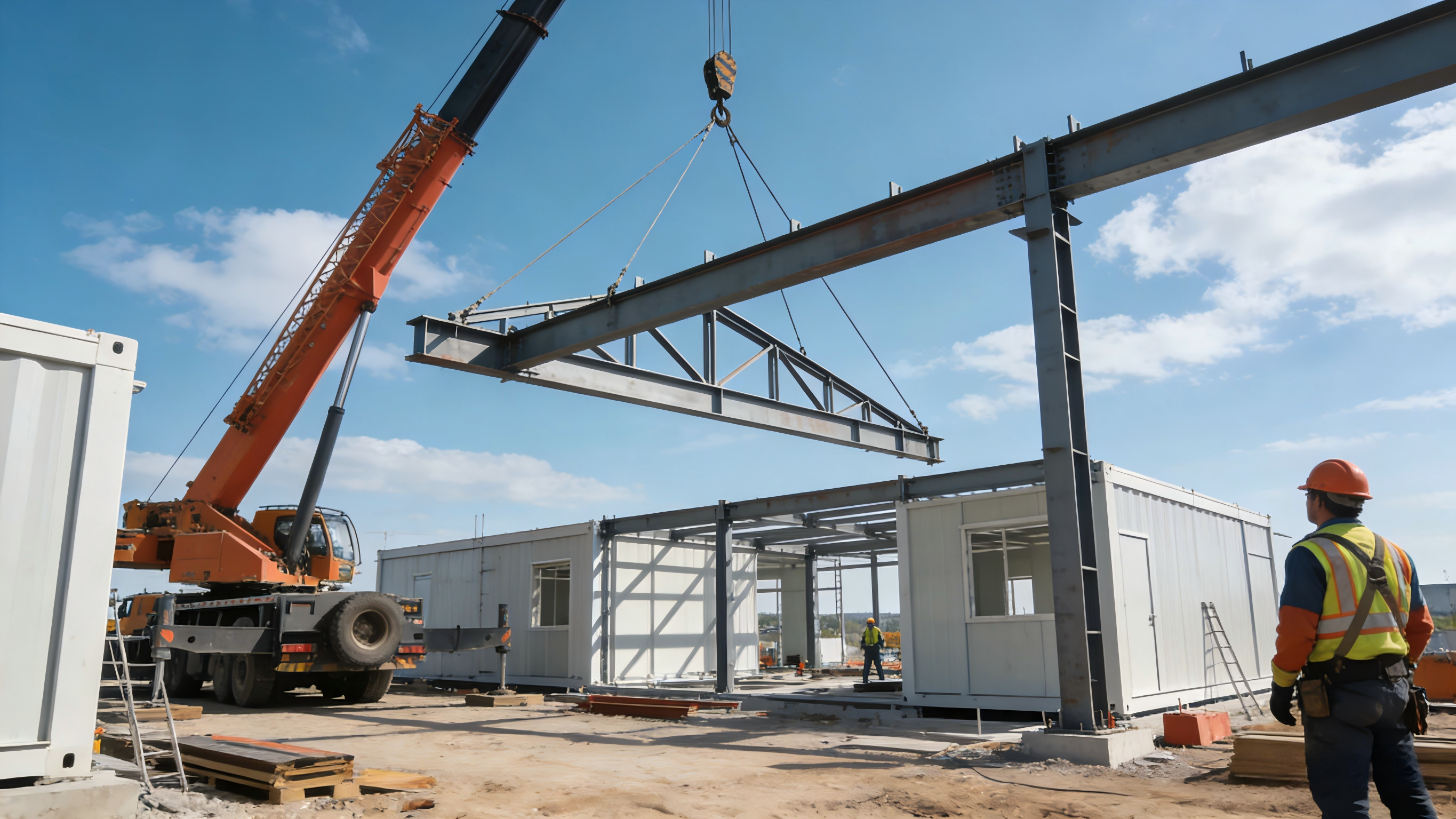
Structural Advantages: Why Modular Steel Structure Delivers Safety, Precision, and Scalability
Inherent Strength, Fire Resistance, and Dimensional Stability of Steel in Intelligent Modular Systems
The unique characteristics of steel have become fundamental to today's modular construction methods. With its impressive strength relative to weight, steel makes it possible to build multiple stories without needing massive support structures. Plus, steel doesn't burn easily, especially when treated with special coatings that expand when heated, which helps prevent buildings from collapsing during fires and stops flames from spreading so quickly. Steel also maintains its shape really well even when temperatures change (about 0.01% expansion for every 100 degrees Fahrenheit rise). This means no warping or shrinking issues that plague wood and concrete constructions over time. Because of this stability, manufacturers can produce modules with incredible precision down to the millimeter level. Such accuracy matters a lot for creating tight building envelopes that keep air out, improve sound insulation, and stand up better during earthquakes. When used in smart modular systems, all these qualities let builders check quality thoroughly in factories before anything gets shipped onsite. According to recent research published in Construction Safety Journal last year, this approach actually cuts down on site accidents by around 32% compared to traditional building methods. The way steel behaves under different loads also makes the whole engineering process simpler and speeds things up when getting approvals for buildings designed to withstand disasters.
Light Gauge Steel (LGS) as the Optimal Framing Solution for Automated, High-Tolerance Prefabrication
Light gauge steel, or LGS for short, makes it possible to build modular structures at scale with automation. Made by rolling high strength galvanized steel into coils, LGS frames maintain tight dimensional control within about 1mm. That's roughly three times better than standard wood framing which can vary by around 3mm. Such precision matters because it allows modules to fit together seamlessly and joints to perform consistently across projects. The tight tolerances also work well with modern manufacturing tech like robotic welders, computer controlled fastening systems, and software that optimizes material usage. According to recent industry reports, these digital tools help cut waste by nearly 20%. Another big plus? Built-in channels for utilities make electrical, plumbing and HVAC installations much easier compared to traditional methods. And since LGS doesn't burn, it won't suffer from mold growth, rot issues, or attract pests like wooden frames do. Most importantly, LGS plays nicely with CAD and CAM systems, letting manufacturers customize designs on demand. Some top facilities are already producing over 500 different panel types each day without compromising speed or quality standards. When looking at all factors combined strength, lightweight properties, and how easy it is to manufacture LGS stands out as the go-to material for building high quality modular structures that can be scaled up efficiently.
Digital Workflow Integration: How Modular Steel Structure Enables End-to-End Intelligent Construction
BIM–CAD–CAM Interoperability Streamlining Design, Engineering, and Off-Site Fabrication
When talking about smart approaches to modular steel buildings, the real game changer is getting all those digital tools to work together smoothly. We're talking about making sure Building Information Models (BIM), CAD drawings, and CAM manufacturing systems can actually talk to each other instead of sitting in separate corners. What happens when these systems connect? Architects, engineers, and the folks who build components offsite start working as one team rather than passing files back and forth. With validated BIM models feeding straight into production lines, machines handle tasks like laser cutting, adding holes where needed, and marking parts automatically. No need for someone to manually translate designs into instructions anymore. The end result? Companies report saving anywhere from 15% to 30% on materials wasted compared to old school methods. Plus, modules show up at construction sites ready to go, so crews can assemble them quickly without mistakes. And let's not forget about timing things right between what comes out of the factory and what needs to happen on site. Getting this coordination right cuts down delays and saves money that would otherwise be spent fixing problems in the field.
Laser Scanning and 3D As-Built Modeling Ensuring Millimeter-Level Accuracy in Modular Steel Assembly
Laser scanning of the site happens right before modules get placed on the ground. This tech captures exact details of what's already there - things like how high the foundations sit, where those anchor bolts actually are positioned, and all the geometric shapes at interfaces too. Accuracy here is around plus or minus 2 millimeters. What comes out of these scans? Verified 3D models that automatically check against the original building information modeling (BIM) plans. Any differences pop up on screen so problems can be fixed before cranes even start lifting components. When it comes time to erect structures, having validation down to the millimeter makes sure those pre-made steel parts line up perfectly. No more worrying about small errors adding up over multiple floors which could compromise whole buildings. With real time clash detection systems running alongside automatic quality assurance docs, companies see about half their usual rework workload disappear. Plus they catch issues immediately instead of dealing with them later. Faster construction times aside, we also notice much better initial fits between components and improved reliability when these buildings stand for years down the road.
Performance Outcomes: Speed, Adaptability, and Sustainability of Modular Steel Structure
40–60% Faster Project Delivery—Validated by UK Healthcare and Singapore Residential Case Studies
Modular steel buildings can really speed things up because different parts of the job happen at once instead of waiting turn after turn. Foundations get laid out while workers are making components inside factory settings away from bad weather conditions. According to research from KingsResearch back in 2023, this approach cuts down on site labor needs somewhere between thirty and forty percent. We see real results too. The National Health Service in the UK managed to get patients into hospitals much quicker when they used those pre-made steel covered medical units. And over in Singapore, their Housing Development Board shaved eleven whole months off building times for apartment blocks by applying what's called DfMA methods. Steel just works better for timing purposes compared to regular concrete work that needs time to dry and adjust measurements. With steel modules everything fits together as expected most of the time, so schedules stay on track without sacrificing either safety standards or final product quality.
Design Flexibility and Deconstruction-Ready Reuse Supporting Circular Economy Goals
Steel modular buildings have a real advantage when it comes to adaptability. The bolted connections mean walls, partitions, and whole sections can actually be moved around, added to, or taken away without messing up the overall structure. This kind of flexibility really helps spaces keep up with changing needs over time, so there's no need to tear things down and start again from scratch. When these structures reach their end of life, those same bolts make taking them apart much easier. Around 98 percent of the steel gets reused directly or melted down for new products, cutting down on carbon emissions by about 30% compared to regular demolition methods according to research published in SciDirect last year. And during construction itself, waste levels drop significantly too, somewhere between 46% and 87%. All this points toward a circular economy model where buildings aren't just fixed assets anymore but become part of a bigger material pool. This approach fits nicely with international guidelines such as the European Union's Circular Economy Action Plan and various CEN/TC 350 sustainability standards for construction work.