 EN
EN

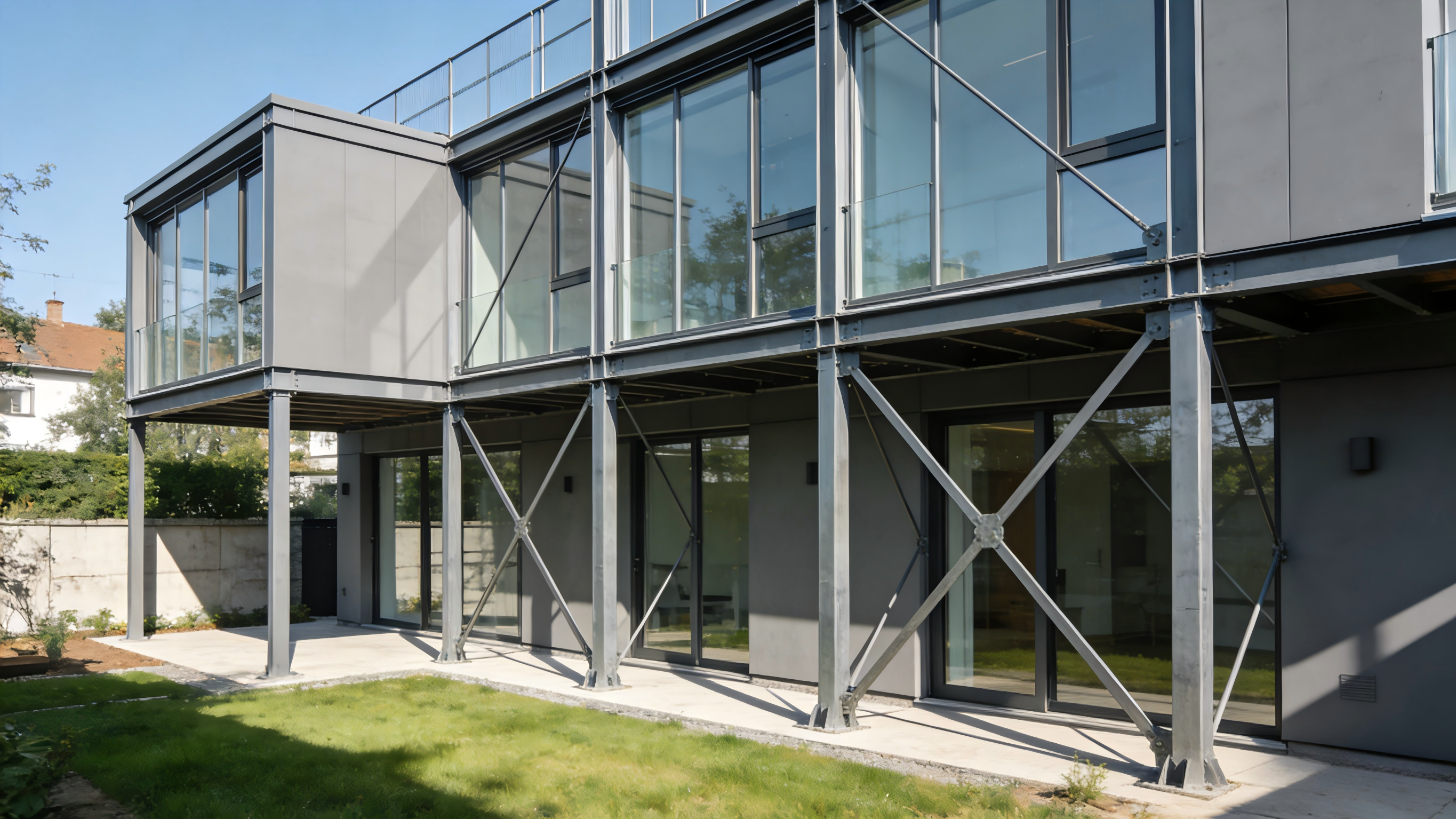
Precision Factory Fabrication: Minimizing Waste and Off-Cut Losses
Modular steel structure fabrication leverages controlled factory environments to drastically cut material waste through precise engineering and advanced techniques.
How Controlled Environments Reduce Material Waste in Modular Steel Structure Production
In factory environments, precise measurements become possible thanks to digital modeling tools that cut down on mistakes and wasted work. Systems such as CNC cutting machines paired with nesting software have revolutionized how steel sheets are arranged. These technologies slash waste materials to below 5%, according to findings from Construction Innovation Report back in 2023. When parts fit together just right without needing extra modifications, companies save around 20% on raw materials at the same time their production speeds pick up. Fewer adjustments needed once things arrive on site means less scrap overall, which makes these factories much greener when handling big construction jobs.
Industry Benchmarks: Waste Reduction Rates in Prefab Steel Projects vs. Traditional Construction
Prefab steel projects consistently outperform conventional building in waste metrics. Studies show an average waste rate of 4–8% for modular approaches versus 15–30% for traditional construction (Global Sustainability Council, 2023). Key comparisons include:
| Metric | Prefab Steel | Traditional Construction | Reduction |
|---|---|---|---|
| Material waste rate | 5% | 25% | 80% |
| Off-cut recycling efficiency | 95% | 60% | 35% increase |
| Rework-induced scrap | <2% | 10–15% | Up to 87% |
This efficiency translates to cost savings and lower embodied carbon, with fewer landfill contributions across project lifecycles.
Infinite Recyclability and Lifecycle Resource Efficiency
Steel’s Closed-Loop Recyclability and Its Role in Cutting Embodied Carbon
The fact that steel can be recycled again and again makes it part of what we call a circular economy, where building parts don't lose their strength or quality no matter how many times they're reused. When compared to other building materials, steel keeps its strength even after being recycled countless times, which cuts down on the need to dig up new raw materials by around 62%, according to the World Steel Association from last year. Recycling steel instead of making it fresh saves a lot of carbon emissions too. Remelting old scrap takes about 74% less energy than creating new steel from scratch. Modular steel buildings really boost these advantages because their standard connection points make taking them apart much easier. Most importantly, this means that well over 90% of all the steel used ends up back in manufacturing processes. Looking at the big picture, this approach reduces the total carbon impact across a building's entire life cycle by approximately 40% when compared with concrete structures.
Design for Disassembly: Reuse, Relocation, and End-of-Life Recovery in Modular Steel Structure Systems
Bolted connections and component-based engineering enable modular steel structures to transcend single-project lifespans through three resource-conserving strategies:
- Adaptive Reuse: Beams and columns retain 100% load-bearing capacity after deconstruction, allowing direct reinstallation in new configurations
- Site Relocation: Entire modules can be transported intact, eliminating demolition waste while preserving 85% of initial embodied energy
- Material Recovery: Magnetic separation ensures 98% steel recovery rates at end-of-life, compared to 34% for mixed-material buildings
This design philosophy transforms structures into material banks—where every kilogram of steel represents future construction resources rather than landfill burden. Projects utilizing these principles document 79% less site waste and 63% lower resource depletion than conventional builds (Circular Economy Institute, 2023).
Reduced On-Site Environmental Disturbance
Shorter Build Timelines, Lower Noise/Dust Emissions, and Minimal Urban Excavation
Building with modular steel structures cuts down on environmental problems at construction sites in several ways. For starters, projects get done much faster when parts are made off site while groundwork happens on site. We're talking about cutting construction time by around half compared to old school methods, which means communities don't have to deal with the mess for so long. Noise levels drop too since most of the noisy work moves to factories instead of happening right next door to people's homes. And there's way less digging required thanks to smarter foundation designs that move less dirt and need fewer heavy machines rumbling around. These benefits make a big difference especially in crowded city areas or places with fragile ecosystems where keeping things running smoothly without creating clouds of dust is really important.
Integrated Energy and Carbon Performance Across the Lifecycle
Thermal Optimization and Structural Efficiency: How Modular Steel Structure Lowers Operational Energy Demand
When it comes to modular steel structures, precision engineering makes a real difference in thermal performance and cuts down on energy costs over time. Steel conducts heat about 50 times better than concrete according to those ASHRAE standards, which means designers have to be careful about where they place things to avoid unwanted heat transfer. Smart engineers tackle this issue by adding continuous insulation between panels, incorporating air and vapor barriers right in the factory, and making sure connections are thermally broken so less energy escapes. All these tricks result in much tighter building envelopes compared to old school construction methods, and studies show HVAC systems need to work roughly 15 to maybe even 20 percent less hard each year. Plus, because steel is so structurally efficient, walls can actually be thinner while still keeping good insulation properties. This combination of material benefits and exacting manufacturing techniques helps reduce carbon footprints throughout the entire life of a building from start to finish.