 EN
EN

The Challenge of Structural Longevity in Commercial Infrastructure
Commercial and industrial building developments operate within demanding environments where structural stability must be maintained over decades of continuous exposure to physical loads. Large-scale distribution hubs, multi-story office towers, and heavy manufacturing facilities experience a continuous combination of static dead loads, dynamic live loads, environmental wind shear, and ambient thermal fluctuations. Designing building skeletons capable of withstanding these relentless operational stresses demands an uncompromising approach to material selection and structural engineering. Traditional framing alternatives, including reinforced concrete or timber assemblies, frequently suffer from internal micro-cracking, moisture absorption, or time-dependent creep that compromises long-term load distribution. Field reports from structural inspections across industrial zones consistently demonstrate that long-term framework degradation typically begins with subtle material shifts that weaken primary connection points over time. Structural engineers and building safety consultants strongly advocate for heavy-duty metal framing solutions because their homogeneous atomic structure provides predictable mechanical behavior, ensuring that structural geometry remains stable, aligned, and secure throughout the entire facility lifecycle.
Metallurgical Ductility and Dynamic Load Dissipation
The ability of a building framework to endure unexpected extreme events depends on the intrinsic metallurgical characteristics of its structural members. Structural steel possesses superior ductility, an essential mechanical property that enables the material to undergo controlled plastic deformation under intense stress without experiencing immediate brittle fracture. When subjected to sudden ground motion during seismic activity or extreme lateral pressures from storm winds, ductile framing components absorb significant kinetic energy and dissipate it safely across the structural matrix. Material science literature and finite element stress modeling confirm that high-yield steel beams and columns redistribute concentrated loads away from primary stress points, preventing localized structural failure from cascading into broader instability. Structural engineering researchers routinely highlight that this inherent strain-hardening capacity provides an irreplaceable safety cushion, allowing commercial buildings to remain standing and structurally resilient even under force levels far exceeding standard design assumptions.
Precision Connection Design and Load Path Redundancy
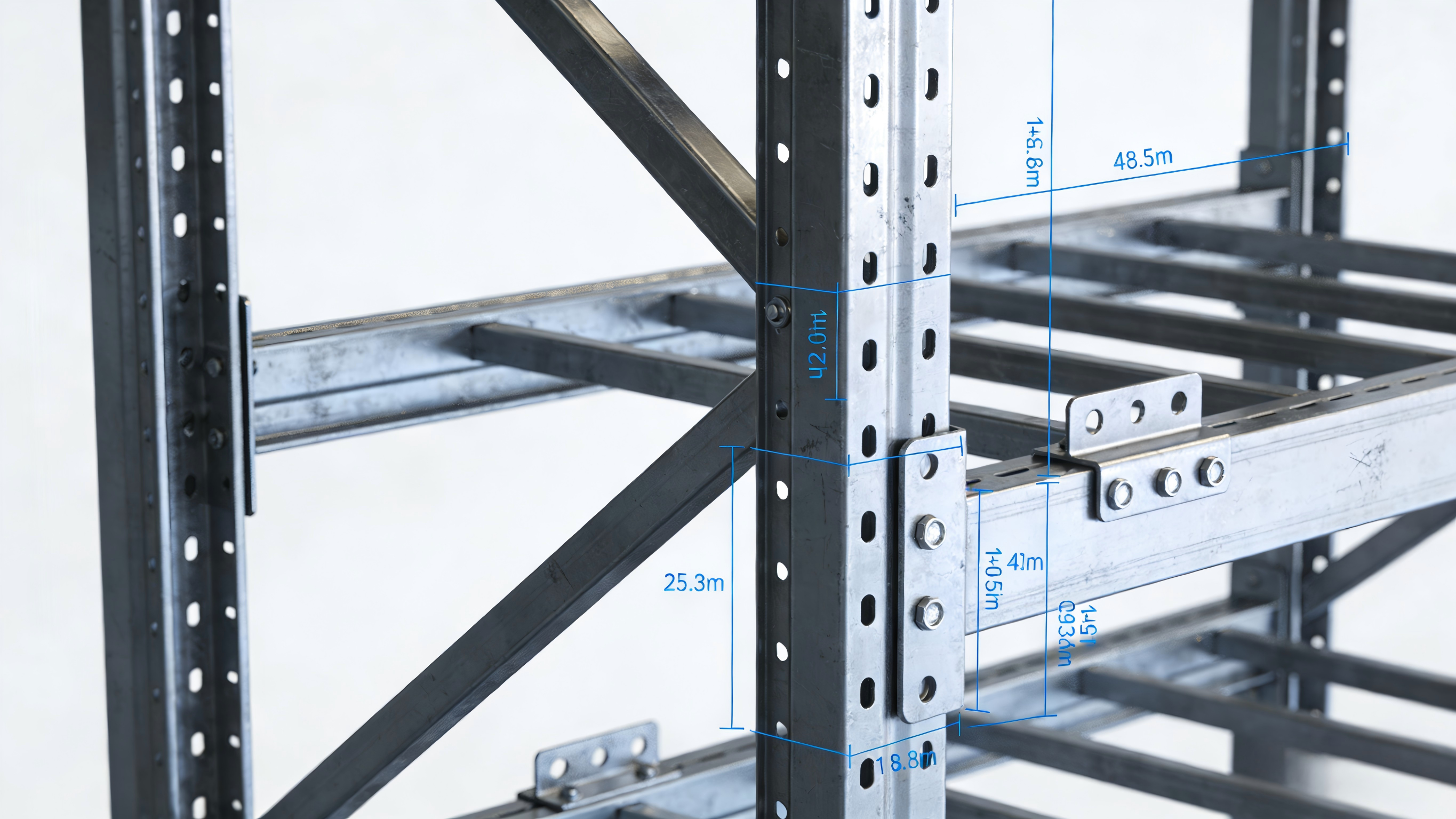
An individual structural profile is only as reliable as the connection architecture that integrates it into the broader building matrix. Beams, columns, trusses, and lateral bracing systems must function as a unified structural network capable of transferring multi-axial forces seamlessly down to the foundation. Precision connection engineering relies on meticulously detailed moment connections, full-penetration groove welds, and high-tensile bolt assemblies engineered to resist shear, tension, and bending moments. Research published by international structural testing bodies emphasizes that introducing load path redundancy within beam-to-column connections prevents progressive collapse, ensuring that if one member experiences localized stress, adjacent structural elements can temporarily absorb and re-route the applied forces. On-site structural evaluations of heavy commercial facilities verify that properly specified connection hardware prevents joint slippage, maintains rigid frame alignment, and eliminates structural deflection under severe continuous loading.
Standardized Inspection Protocols and Regulatory Compliance
Establishing absolute structural reliability requires rigorous, standardized inspection protocols across every stage of material preparation, component fabrication, and site assembly. International building safety standards dictate strict testing regimens to verify material yield strength, dimensional tolerances, and joint integrity before erection proceeds. Certified quality control inspectors employ advanced non-destructive testing methodologies, such as ultrasonic flaw detection, magnetic particle examination, and X-ray radiography, to inspect structural welds and heavy-section profiles for internal void spaces or surface discontinuities. Rigorous adherence to benchmarks set by authoritative bodies like the American Institute of Steel Construction and ISO quality management frameworks ensures that every installed structural member satisfies strict safety thresholds. Civil engineering authorities consistently emphasize that transparent quality verification provides property owners, regulatory agencies, and insurers with verifiable assurance that the completed facility complies fully with structural safety requirements.
Sustaining Structural Excellence Through Global Supply Capabilities
Choosing high-performance structural framing components directly dictates the long-term safety, operational continuity, and asset value of commercial real estate developments. By eliminating the risks associated with material degradation, joint instability, and regulatory non-compliance, project developers construct durable facilities that withstand rigorous environmental conditions and heavy mechanical demands. Superior structural components transform complex engineering blueprints into safe, dependable building realities. Guoshun applies extensive manufacturing expertise and stringent quality control protocols to produce exceptional structural steel components designed for demanding structural applications. Operating through a robust, globally integrated supply network, Guoshun delivers continuous access to precision-fabricated structural profiles and comprehensive supply chain coordination for major construction enterprises worldwide. Meticulous material engineering transforms raw structural steel into an enduring foundation, empowering developers to execute ambitious architectural projects with absolute confidence.
Table of Contents
- The Challenge of Structural Longevity in Commercial Infrastructure
- Metallurgical Ductility and Dynamic Load Dissipation
- Precision Connection Design and Load Path Redundancy
- Standardized Inspection Protocols and Regulatory Compliance
- Sustaining Structural Excellence Through Global Supply Capabilities