 EN
EN

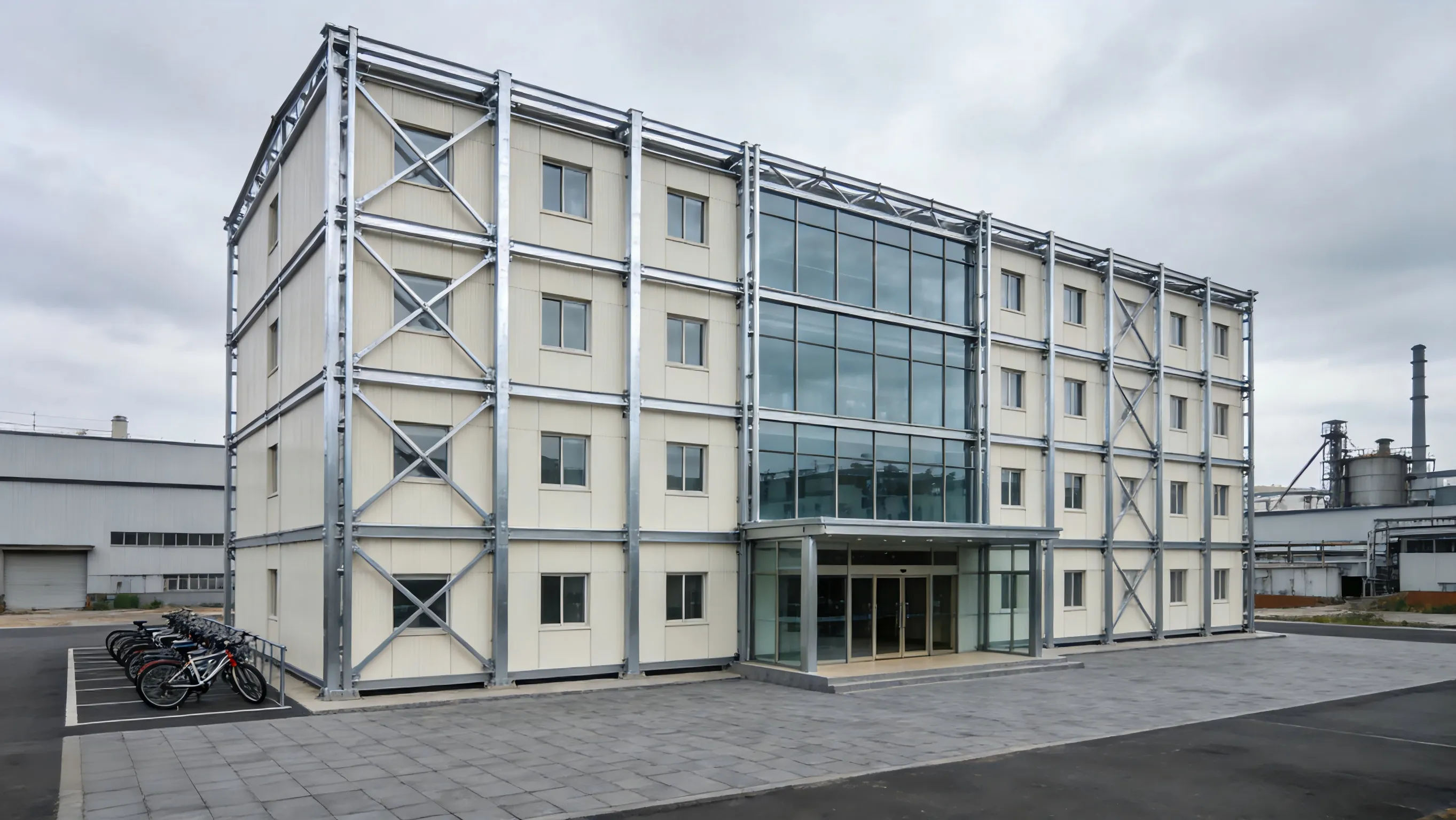
Reduced Waste and Lower Embodied Energy Through Prefabricated Steel
Precision manufacturing: How factory-controlled prefabrication cuts on-site waste by up to 90%
Traditional construction sites often operate like open-air factories, where material waste from cutting, weather damage, and errors can exceed 20% of total materials—an economic and environmental liability. Prefabricated steel inverts this model: in a controlled factory setting, components are engineered and cut using advanced software such as Building Information Modeling (BIM), which optimizes material yield down to the millimeter. This precision eliminates over-ordering, minimizes offcuts, and prevents weather-related spoilage. Industry studies consistently report that factory-controlled prefabrication reduces on-site construction waste by up to 90% compared to conventional methods. The result is not only dramatic landfill diversion but also safer, cleaner, and more organized job sites. Crucially, any minimal scrap generated—such as drilling swarf or trimmings—is systematically sorted and returned directly to steel mills for recycling, establishing a closed-loop material system rarely achievable on traditional sites.
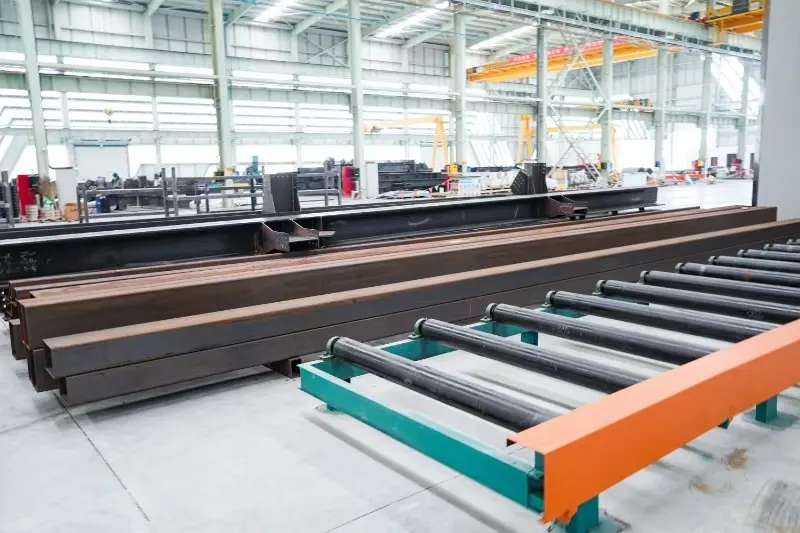
Embodied energy optimization: Recycled content, efficient logistics, and minimized rework
Prefabricated steel significantly lowers a project’s embodied energy—the total energy consumed across extraction, manufacturing, transport, and assembly. First, structural steel is among the most recycled industrial materials globally, with new steel sections routinely containing 30–98% recycled content. Using high-recycled steel avoids the energy-intensive blast furnace process required for virgin iron ore, cutting upstream emissions substantially. Second, factory fabrication enables highly efficient logistics: fully assembled frames for large building segments can be delivered in a single flatbed shipment, reducing vehicle miles, fuel use, and associated emissions. The just-in-time delivery model also eliminates over-ordering—preventing the energy waste of producing, shipping, and discarding surplus materials. Third, stringent factory quality control virtually eliminates on-site rework. A beam fabricated to millimeter tolerance and erected correctly the first time avoids the embodied energy penalty of demolition, replacement, and wasted labor. Since rework accounts for over 5% of typical construction costs—and correspondingly high carbon output—prefabrication neutralizes this inefficiency at its source.
Accelerated, Low-Disturbance Delivery Enabled by Prefabricated Steel
Shorter schedules, fewer site vehicles, and reduced temporary infrastructure impacts
Prefabricated steel compresses project timelines by up to 50% compared to traditional construction. While foundations and site work proceed, components are simultaneously manufactured off-site under controlled conditions—eliminating on-site cutting, welding, and field adjustments. This parallel workflow slashes on-site assembly time and reduces labor requirements by as much as 30%. The shortened schedule means fewer weeks of active site operations, directly lowering the number of delivery vehicles, equipment movements, and worker commutes—cutting traffic congestion, fuel consumption, and emissions. Temporary infrastructure—such as on-site fabrication sheds, material laydown yards, and waste storage areas—is dramatically reduced or eliminated entirely. That translates to less temporary power, water, and safety infrastructure, along with lower soil compaction, dust, and noise. With pre-engineered elements arriving ready to erect, the physical and environmental footprint shrinks. This fast, clean delivery supports sustainable site development credits in green building rating systems—including LEED—and enables earlier occupancy of revenue-generating spaces, all while minimizing disruption to surrounding communities.
Long-Term Sustainability: Resilience, Adaptability, and Circular Lifecycle of Prefabricated Steel
Prefabricated steel structures deliver long-term sustainability through proven structural resilience, future-ready adaptability, and a fully circular lifecycle. Factory-controlled production ensures consistent quality and dimensional accuracy—enabling buildings to withstand extreme weather and seismic events while remaining flexible enough to accommodate expansions or interior reconfigurations without major demolition. This durability extends service life, and when decommissioned, components re-enter the material loop, supporting a true circular economy.
Near-infinite recyclability and closed-loop material reuse in the circular economy
Steel is uniquely suited to circular construction: it can be recycled infinitely without degradation in strength or performance, and its magnetic properties simplify sorting from mixed waste streams. According to the World Steel Association (2023), over 90% of structural steel is recovered for recycling or reuse globally. Prefabricated steel components—designed with precise dimensions and standardized bolted connections—facilitate disassembly and direct reuse of beams, columns, and panels. In closed-loop systems, fabrication scrap and end-of-life steel feed electric arc furnaces—increasingly powered by renewable energy—to produce new steel. This process slashes demand for virgin ore and reduces embodied carbon, keeping high-value materials in continuous circulation.
Design-for-deconstruction: Efficient disassembly and component reuse in adaptive reuse projects
Prefabricated steel excels in design-for-deconstruction (DfD). Bolted and modular connections replace permanent welds, enabling entire structural frames to be dismantled cleanly and rapidly. Components can be catalogued, inspected, and reused in new buildings with minimal reprocessing—preserving embedded energy and eliminating demolition waste. In adaptive reuse projects, this approach allows interior layouts to be reconfigured or floor plates expanded without compromising structural integrity. Research from the American Institute of Steel Construction (AISC 2021) indicates that DfD strategies can reduce a building’s lifecycle carbon footprint by up to 30%. By combining factory precision with modular detailing, prefabricated steel transforms buildings into reusable material banks—supporting a built environment where resources are cycled, not discarded.
Enabling Net-Zero Buildings Through Prefabricated Steel Integration
Prefabricated steel provides a strategic pathway to net-zero energy and carbon performance. Precision manufacturing in controlled environments minimizes thermal bridging and air leakage—reducing operational energy demand from day one. Its high recycled content—often exceeding 90%—and 100% recyclability at end-of-life dramatically lower embodied carbon. When integrated with rooftop solar PV, high-performance envelopes, and smart building systems, these structures readily achieve annual net-zero energy consumption. Combined with near-zero on-site waste generation and accelerated timelines, prefabricated steel aligns seamlessly with LEED v4.1, BREEAM, and other leading green building frameworks—making it a foundational choice for developers committed to credible, measurable net-zero outcomes.
FAQ
What is prefabricated steel, and how does it reduce waste?
Prefabricated steel involves factory-controlled manufacturing of construction components. This process significantly cuts waste by using precision tools that minimize material offcuts and prevents over-ordering.
How does prefabricated steel lower embodied energy?
Prefabricated steel uses recycled materials, efficient transportation logistics, and reduces rework. These factors collectively minimize the energy used in extraction, manufacturing, transport, and assembly.
What are the environmental benefits of prefabricated steel?
Environmental benefits include reduced construction waste, lower embodied carbon, scalable renewable energy integration, and support for circular construction through recyclability and reuse.
Is prefabricated steel suitable for net-zero building projects?
Yes, prefabricated steel is ideal for net-zero projects because of its high recycled content, low embodied energy, and compatibility with energy-efficient designs and technologies.
Table of Contents
- Reduced Waste and Lower Embodied Energy Through Prefabricated Steel
- Accelerated, Low-Disturbance Delivery Enabled by Prefabricated Steel
- Long-Term Sustainability: Resilience, Adaptability, and Circular Lifecycle of Prefabricated Steel
- Enabling Net-Zero Buildings Through Prefabricated Steel Integration
- FAQ