 EN
EN

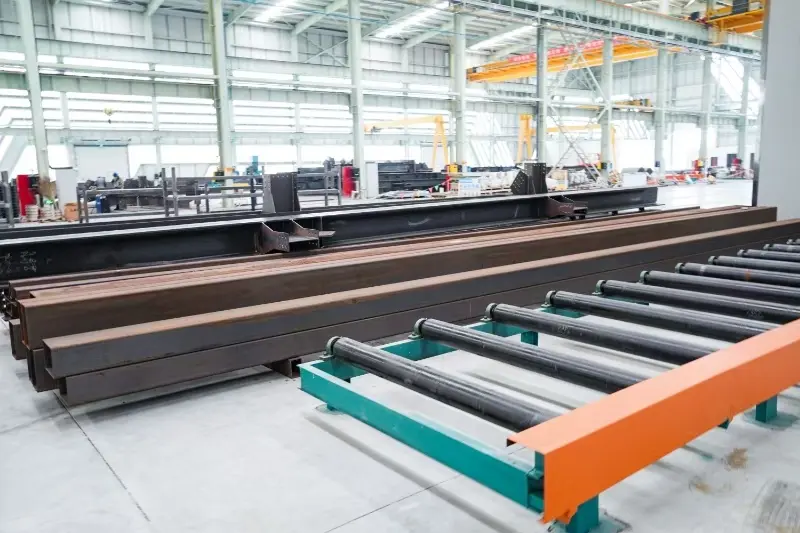
Steel Structure Contracting as the Cross-Border Integration Engine
How integrated contracting unifies design, fabrication, logistics, and erection across jurisdictions
In cross-border projects, traditional contracting fragments steel structure delivery into isolated phases—design in one country, fabrication in another, and erection managed locally. This disjointed approach breeds cost overruns and schedule delays. Integrated contracting changes this by entrusting a single entity with end-to-end responsibility, from initial engineering to final bolt tightening. This model aligns structural design assumptions with manufacturing capabilities early, eliminating the disconnect between what engineers specify and what fabricators can produce. It also centralizes material procurement, ensuring consistent steel grades and welding procedures across global supply chains. Logistics coordination becomes proactive rather than reactive, with shipping and customs clearance embedded into the project timeline from day one. The result is a streamlined workflow where design, fabrication, logistics, and erection operate as a unified sequence—not a series of handoffs.
Case study: UAE–India–Germany industrial warehouse — 22% schedule compression via single-point contracting
A recent industrial warehouse project spanning three countries illustrates the tangible benefits of integrated contracting. The project required steel columns fabricated in India, cladding systems sourced from Germany, and final assembly in the UAE. Under a single-point contracting agreement, the contractor orchestrated all phases—design, material procurement, multimodal transport, and on-site erection—under one contract. This eliminated the coordination gaps that typically plague multi-vendor arrangements. Engineering teams in India and Germany collaborated directly on connection details, avoiding costly rework during erection. Logistics were pre-planned, with containerized components routed through pre-vetted corridors and customs documentation filed in parallel with fabrication. The outcome was a 22% reduction in the overall project timeline compared to benchmarked segmented contracting approaches—achieved by overlapping traditionally sequential activities and removing the latency of multi-party approvals and change orders.
Regulatory Resilience Through Contracting-Led Compliance
Why 78% of cross-border steel project failures stem from regulatory misalignment—not technical gaps
Studies show that 78% of cross-border steel project failures originate from regulatory misalignment—not technical shortcomings. When contracting fails to unify code interpretations—from seismic design in one region to fire safety in another—the result is halted shipments, re-fabrication, and contractor disputes. For example, a steel structure compliant with Eurocode may be rejected in a jurisdiction requiring American standards, triggering months of delay. This misalignment is not a design flaw but a contracting oversight. The financial toll is immense: rework and legal fees often exceed 15% of the project budget (Industry Benchmark 2023). Resilient contracting integrates regulatory due diligence into every phase—from bid preparation to commissioning. By embedding regulatory intelligence early, contracting-led compliance prevents such losses and builds trust with local authorities. It ensures that all stakeholders, from engineers to erectors, operate under a common compliance framework, turning regulatory complexity into a manageable, predictable process.
Embedding dual-compliance frameworks (ISO 9001/EN 1090 + local permitting) into contracting scope
Embedding dual-compliance frameworks—such as ISO 9001 and EN 1090 alongside host-country permitting requirements—into the contracting scope is a strategic necessity. It requires the steel contractor to adhere to internationally recognized quality and fabrication standards while simultaneously navigating local regulatory expectations. This dual-duty approach prevents gaps where one standard is met but local requirements are overlooked. The contracting agreement must explicitly assign responsibility for permit acquisition, third-party inspections, and certification of compliance. By doing so, clients transfer compliance risk to the contractor, who possesses the expertise to manage it. Moreover, a well-defined scope prevents scope creep and disputes over liability, ensuring all parties are aligned on regulatory deliverables. Regular audits and progress checks tied to compliance milestones further reinforce this resilience—leading to smoother approvals, fewer delays, and a compliance framework that adapts to regulatory changes.
Contracting-Optimized Global Logistics for Steel Structures
How pre-vetted multimodal corridors and customs pre-clearance reduce logistics-driven overruns
Logistics inefficiencies account for over 25% of cross-border project delays (Global Construction Survey 2022). A single-point steel structure contracting model embeds logistics planning from project inception. The contractor pre-vets multimodal corridors—sea, rail, and heavy-haul trucking—mapping route constraints, bridge capacities, and seasonal weather impacts. Simultaneously, it secures customs pre-clearance by submitting harmonized commodity codes, certifications, and country-of-origin documentation before the first steel column is fabricated. This proactive approach eliminates last-minute port demurrage, customs holds, and rerouting events that cascade into costly schedule overruns. Contracting-led coordination ensures that containerized steel components arrive on-site just-in-time, reducing storage needs and enabling seamless erection. By integrating these logistics functions into the contracting scope, cross-border steel projects cut transit-related delays by an average of 18% (Industry Benchmark 2023), delivering predictable timelines and budgets through end-to-end accountability for material flow across jurisdictions.
Unified Accountability: Mitigating Technical Risk Through Contracting Clarity
Resolving liability ambiguity in seismic retrofitting and cross-jurisdictional performance standards
Seismic retrofitting for steel structures spans conflicting codes—Eurocode 8 and ASCE 7 may diverge on ductility, while local amendments add interpretation layers. In cross-border projects, liability fragments when design, fabrication, and erection are contracted separately; each party shifts blame if a connection fails under seismic load. Single-point contracting clarifies accountability by embedding a unified performance specification that reconciles all applicable standards. The contractor assumes end-to-end responsibility for engineering analysis, material traceability, and installation quality—eliminating the “grey zone” where claims arise. This model streamlines documentation, ensuring retrofit measures meet both international benchmarks and local authority requirements, turning compliance into a defined, auditable deliverable.
Frequently Asked Questions
What is integrated steel structure contracting?
Integrated steel structure contracting is a model where a single entity oversees the entire process of design, fabrication, logistics, and erection of steel structures. This approach eliminates coordination gaps, enabling smoother project execution and faster timelines.
How can integrated contracting improve cross-border projects?
Integrated contracting unifies regulatory compliance, material procurement, logistics planning, and engineering. It reduces inefficiencies like rework, customs delays, and fragmented liability, ensuring seamless execution across jurisdictions.
What are dual-compliance frameworks, and why are they important?
Dual-compliance frameworks ensure adherence to international quality standards like ISO 9001 and EN 1090 while meeting specific local permitting requirements. They provide a balanced approach to compliance, mitigating risks of regulatory misalignment.
How does contracting address regulatory complexities in steel projects?
Through contracting-led compliance practices, regulatory due diligence is integrated into each project phase, from design to commissioning. This helps prevent delays caused by code misinterpretations or misaligned compliance standards.
What role does logistics play in steel structure contracting?
Logistics under integrated contracting involves pre-vetted multimodal routes and proactive customs clearance. This reduces delays and ensures timely delivery of steel components to the project site.
Table of Contents
- Steel Structure Contracting as the Cross-Border Integration Engine
- Regulatory Resilience Through Contracting-Led Compliance
- Contracting-Optimized Global Logistics for Steel Structures
- Unified Accountability: Mitigating Technical Risk Through Contracting Clarity
-
Frequently Asked Questions
- What is integrated steel structure contracting?
- How can integrated contracting improve cross-border projects?
- What are dual-compliance frameworks, and why are they important?
- How does contracting address regulatory complexities in steel projects?
- What role does logistics play in steel structure contracting?